For modern hunters and precision shooters, choosing the best suppressor is a practical way to improve comfort, consistency, and field awareness across a wide range of rifles and cartridges.
Rifle suppressors, sometimes called rifle silencers, cool and slow expanding gases at the muzzle. This process reduces sound signature, softens recoil, and limits muzzle flash for a shooting experience that’s easier on your ears and body. However, a poor rifle-suppressor match can add unnecessary weight and weaken shooting accuracy.
In this step-by-step guide, we help hunters and precision shooters choose the best suppressor for their needs based on caliber compatibility, intended use, mounting style, and legal requirements.
In practical terms, a suppressor is a device threaded or mounted to the end of a rifle barrel to manage muzzle blast and gas expansion.
Despite what movies suggest, suppressors do not make rifles completely silent. Most centerfire hunting rifles still register roughly 130–140 decibels even with a quality suppressor installed. What they do provide is a meaningful reduction in blast, recoil, and concussion, benefiting both the shooter and those nearby.
For Western big game hunters, predator callers, and long-range shooters, these benefits add up quickly. Reduced blast makes it easier to communicate with hunting partners, maintain situational awareness, and avoid disturbing nearby animals or other hunters.
In precision settings, suppressors can also contribute to more controlled follow-through and improved consistency, especially during extended range sessions.
An unsuppressed centerfire rifle can exceed 160 decibels at the shooter’s ear, a level capable of causing immediate and permanent hearing damage. Well-designed suppressors typically reduce muzzle blast by 20–35 decibels, bringing exposure closer to what you’d experience using quality earplugs or earmuffs.
Suppressors don’t eliminate the need for caution, but they significantly improve comfort compared to shooting unsuppressed. For hunters, being able to hear a guide’s instructions and maintain field awareness without long-term hearing-loss risk is a real advantage in the field.
A properly mounted suppressor can also reduce felt recoil and muzzle rise. By moderating gas release and adding mass at the muzzle, many suppressors help shooters stay in the scope after the shot, making it easier to call impacts at distance.
A suppressor’s added weight and back-pressure can change how a rifle behaves, including a shift in point of impact (POI). However, consistency and repeatability matter more than the absolute amount of shift.
For hunters and precision shooters who remove and reinstall their suppressor between sessions, accuracy depends on quality mounting systems, repeatable designs, and an understanding of POI shift with suppressors.
Rifle silencers are regulated in the United States under the National Firearms Act. Purchasing one requires a federal background check and registration through the ATF. While the process is straightforward, it involves paperwork and waiting periods that buyers should understand before committing.
The recent suppressor tax stamp removal has altered how the tax stamp process is handled and simplified ownership for many buyers. Even with these changes, however, processing times can still vary depending on submission method and application volume. Working with an experienced dealer or manufacturer helps reduce errors and speed up approval.
You must also confirm state and local regulations. Suppressors may be legal to own in a state but restricted for hunting certain species or during specific seasons. Reviewing federal law alongside state wildlife regulations ensures compliance when buying a suppressor.
Suppressor ownership has expanded rapidly over the last decade, with millions of legally registered units now in circulation nationwide. This growth reflects their mainstream acceptance among law-abiding hunters and shooters who value safety, performance, and ethical firearm use.
Choosing the best suppressor starts with matching the device to your rifle, cartridge, and shooting goals. A backcountry elk hunter has different priorities than a precision shooter spending long days behind a rifle on steel.
This section breaks down the core decision points to help narrow your options. For most first-time buyers, a .30-caliber suppressor is a smart starting point, offering broad compatibility across popular cartridges while reducing sound and recoil.
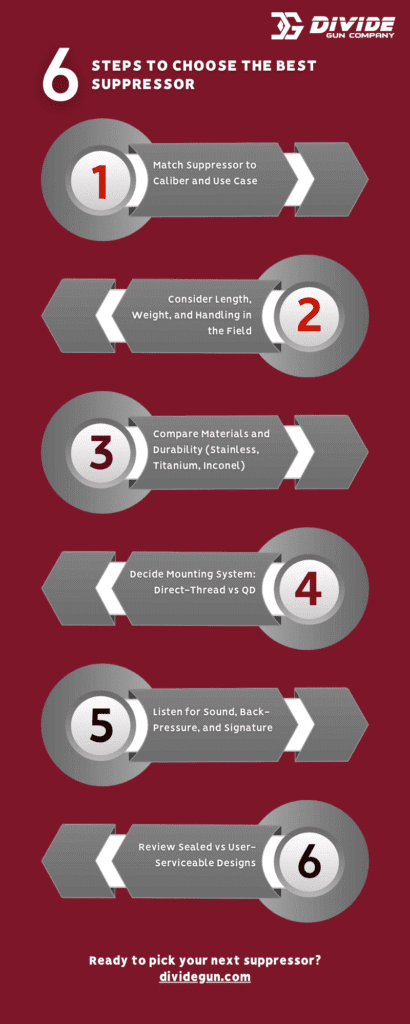
Suppressors are rated by caliber and pressure, often listed as “.30-cal up to .300 Win Mag” or similar. This rating defines which cartridges the suppressor can safely handle. Many hunters find a 30 cal suppressor best because it covers .308, 6.5 Creedmoor, and other smaller cartridges with a single unit.
Use case also matters. A suppressor intended for a .300 Win Mag elk rifle must handle higher pressures and longer barrel lengths than one dedicated to a lighter 6.5 Creedmoor setup. Western mule deer hunters and long-range shooters often favor lighter cans that balance well on mid-length barrels, while magnum hunters prioritize strength and durability.
Suppressor length and weight directly affect how a rifle carries and handles. Shorter, lighter suppressors are easier to maneuver in timbered terrain and less fatiguing on long hikes. Longer suppressors generally offer greater sound and recoil reduction but add bulk to an already long rifle.
Those searching for the best suppressor for hunting should consider total system length, balance from shooting sticks or a pack, and how the rifle feels during unsupported shots. Advancements in lightweight suppressors have made it easier to strike a balance between performance and portability, especially for backcountry hunts.
Suppressor materials influence weight, strength, and heat resistance.
Choosing the best suppressor material comes down to your firing schedule and cartridge selection. Low-volume hunting rifles place less thermal stress on a suppressor than high-round-count precision training or magnum cartridges. Shooters who train frequently or run hotter loads often invest in more heat-resistant designs for longevity.
Mounting style plays a major role in weight, repeatability, and ease of use. Direct-thread suppressors screw directly onto the barrel, offering simplicity, lighter overall weight, and excellent return-to-zero. For long-range hunters and shooters who value consistency above all else, this approach is often preferred.
Quick-detach systems allow faster swaps between rifles, which can be convenient for shooters running multiple hosts. The tradeoff is added weight and mechanical complexity. Precision-oriented shooters often gravitate toward high-quality direct-thread or taper-mount systems that provide repeatable lockup and minimal POI shift.
Suppressor performance isn’t defined by sound alone. Internal baffle design affects back-pressure, gas blowback, and recoil impulse, all of which influence shooter comfort and rifle behavior. Higher back-pressure designs may offer excellent sound reduction but can increase bolt speed or expel gas in the faces of shooters who use semi-automatic rifles.
Some hunters and precision shooters value maximum sound reduction for close-range predator hunts, while others prefer a balanced suppressor that offers softer recoil and flatter shooting at long range. Many of the best modern suppressor designs aim to strike a middle ground, delivering consistent performance across varied use cases.
Most centerfire rifle suppressors are sealed units. These designs are generally stronger, lighter, and better suited to high-pressure cartridges. While they can’t be disassembled, sealed suppressors benefit from routine carbon management and proper storage.
User-serviceable suppressors are more common in rimfire or high-fouling applications. They allow shooters to remove lead and carbon buildup directly. For most hunting and centerfire precision rifles, sealed designs offer the best balance of strength and weight, while serviceable models fill niche roles.
Shop The MTN Lite Ti 8 Baffle Suppressor
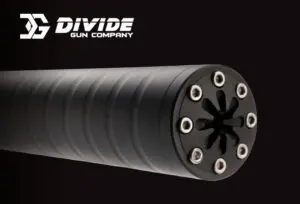
While a versatile suppressor can serve many rifles, consider tailoring your choice to specific cartridges for improved balance, recoil control, and overall shooting comfort.
This section maps common hunting and precision cartridges to suppressor traits that matter most in the field.
Hunters running .308, .30-06, or .300 Win Mag often want one suppressor to cover everything from whitetails to elk. A strong, magnum-rated suppressor with moderate length provides flexibility without excessive bulk.
Key traits include durability, compatibility across multiple rifles, and consistent POI repeatability. This approach suits hunters who value versatility and plan to move a single suppressor among several rifles throughout the season.
Shooters who spend significant time behind .308-based rifles often prioritize durability and repeatability. Higher round counts and extended strings of fire place greater thermal demands on a suppressor.
The best .308 suppressors are designed for consistent accuracy, minimal POI shift, and reliable mounting. They support training, competition, and crossover hunting use without sacrificing precision.
The 6.5 Creedmoor’s efficiency makes it popular for Western hunting and precision shooting. Shooters often favor lighter suppressors that preserve rifle balance and minimize POI shift.
Pair a mid-length barrel with a compact suppressor to avoid overly long setups that snag in brush or complicate prone shooting. Thoughtful suppressor-rifle pairing keeps the system practical for range and field use.
For hunters and precision shooters planning long-term setups, designing the custom rifle and suppressor as a matched system improves balance, reliability, and overall performance compared to adding a suppressor as an afterthought.
Barrel length, contour, and thread pattern can all be optimized around a specific suppressor. A well-matched setup helps manage overall rifle length, minimizes unwanted POI shift, and ensures reliable mounting under field conditions. Precision-focused builders often tune these elements together to maintain accuracy and consistency at a distance.
Weight distribution also matters. Pairing lightweight stocks with carbon or medium-contour barrels and a compact suppressor keeps the total system weight manageable for long days in steep country. Hunters benefit from rifles that carry comfortably without sacrificing shootability when it’s time to settle in behind the scope.
Designing the system holistically allows shooters to account for accessories influenced by suppressor use. Sling attachment points, bipod selection, and scope height can all be optimized to maintain natural shooting positions once a suppressor is installed. This holistic approach leads to rifles that feel intuitive and predictable, both on the mountain and on the range.
Suppressors reduce blast and concussion, making shots more manageable and less disruptive. But they do not completely silence rifles. Most centerfire hunting rifles remain loud, typically around 130–140 decibels, even with a quality suppressor. While this is quieter than shooting unsuppressed, it can still pose hearing risks over time.
A magnum-rated best 30 cal suppressor can safely cover many popular hunting and precision cartridges. Rimfire rifles and very large calibers usually require dedicated suppressors.
Many new buyers start with a versatile .30-cal unit and add specialized suppressors as their shooting interests expand.
Quality rifle suppressors often improve shooting consistency by reducing recoil and muzzle jump. Nearly all suppressors shift the POI, so re-zeroing is required.
Repeatability matters more than the amount of shift. Reliable mounts and consistent design ensure the rifle returns to zero after removal and reinstallation.
Muzzle brakes reduce recoil by redirecting gas. However, they increase noise and blast to the shooter and nearby partners. Suppressors reduce noise, recoil, and muzzle flash simultaneously.
Some precision rifles use brakes as mounting devices for suppressors, combining fast attachment with better field manners once the suppressor is installed.
Choosing the best suppressor comes down to clearly defining your priorities. Hunters and precision shooters can narrow their options based on a few core criteria:
Comparing specifications and real-world user feedback helps eliminate options that don’t align with your shooting style. From there, work with a knowledgeable builder or dealer to confirm compatibility and avoid costly mismatches.
If you’re exploring options or planning a new system build, Divide Gun Company is here to simplify the decision-making process and set you up for long-term success. Check out our available suppressors and follow our simple step-by-step process to order yours today.