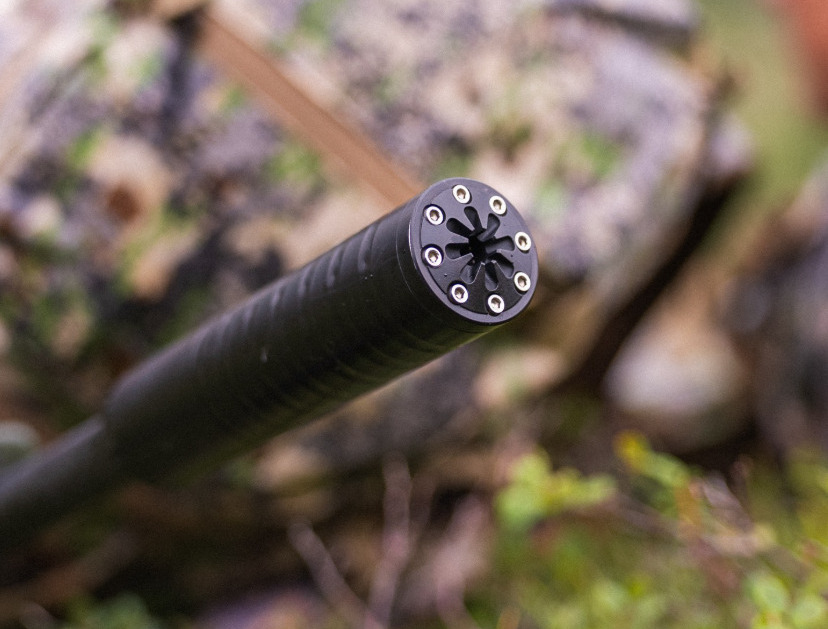
Many shooters worry that adding a suppressor will change where their rifle hits, reduce accuracy, or introduce unpredictability that they cannot manage. The reality is more straightforward and far less alarming. Suppressors can cause a point-of-impact (POI) shift, but in most cases that shift is consistent, repeatable, and easy to account for with proper testing and zeroing.
In this guide, we break down what POI shift is and why it happens, helping shooters make informed decisions and use suppressed firearms with confidence.
POI refers to where a bullet actually strikes the target. Point of Aim (POA) is where the shooter is aiming through their sights or optic. POI shift occurs when the bullet impact moves relative to the original zero, even though the shooter’s point of aim remains the same.
Suppressors are one of the most common firearm accessories associated with POI shift because they add mass to the end of the barrel and change how the system behaves when a shot is fired. In other words,, the rifle no longer operates in the same physical configuration as when it was zeroed unsuppressed.
This is why shooters often notice a different impact location when switching between suppressed and unsuppressed setups. It does not mean the rifle has become inaccurate. In most cases, the rifle is still grouping just as well—only in a slightly different place on the target.
Modern suppressors are designed with repeatability in mind. A predictable POI shift simply means the rifle needs to be zeroed for the configuration you plan to use. Once that zero is established, accuracy remains consistent and reliable.
Especially for hunters, knowing where your rifle impacts with a suppressor attached ensures ethical shots, dependable performance, and confidence behind the trigger.
The short answer is yes—suppressors can change the point of impact compared to an unsuppressed zero.
Suppressor POI shift is usually consistent and repeatable, not random. In other words, the rifle does not suddenly lose accuracy. Instead, the entire group moves to a new location on the target. Once that shift is understood and confirmed, shooters can confidently account for it.
This behavior is not unique to suppressors. Many common rifle accessories can change POI, especially when mounted on the barrel or when they influence how the rifle recoils. Changes in barrel mass, balance, or vibration can all alter POI, which is why even bipods, muzzle devices, and optics can affect zero.
For hunters and precision shooters, this matters because first-round accuracy is critical. A small, predictable shift is manageable. A large or inconsistent shift is not. Understanding how your rifle behaves with a suppressor attached allows you to verify impacts before heading into the field or dialing for distance.
For shooters still in the research phase, learning how POI shift works is a valuable step in buying a suppressor. Knowing what to expect removes uncertainty and helps ensure the suppressor you choose fits your rifle, shooting style, and intended use.

POI shift happens because adding a suppressor changes how the barrel and rifle system behave during the firing cycle. The causes are mechanical and predictable, not mysterious.
When a rifle is fired, the barrel vibrates. These vibrations, known as barrel harmonics, influence the exact angle and timing of the bullet as it exits the muzzle. Adding a suppressor changes the vibration pattern by adding weight and altering the way the barrel oscillates.
Even small changes in vibration timing can result in a measurable shift at the target, especially at longer distances.
Suppressors add mass to the very end of the barrel. This changes the balance and increases the barrel’s leverage during recoil. Lighter-profile barrels tend to show more noticeable POI shifts than heavier barrels because they are more sensitive to added weight.
For this reason, lightweight hunting rifles often display more shift than precision rifles with thicker barrels.
Your suppressor’s thread alignment, the surface to which it is mounted, and torque all play a role in repeatability. A suppressor that mounts the same way every time will generally return to the same POI shift when reinstalled.
Inconsistent mounting can lead to unpredictable changes, which is why proper installation and clean threads are critical for reliable performance.
There is no single number that applies to every rifle and suppressor combination, but in real-world use, most shooters see a POI shift of about 1 to 3 inches at 100 yards. The exact amount depends on factors like barrel profile, suppressor weight, mounting system, and ammunition.
What matters more than the direction or distance of the shift is repeatability. A rifle that consistently shifts two inches low and right every time a suppressor is attached is far more usable than one that shifts unpredictably from group to group. Consistent shift allows shooters to zero correctly and trust their equipment.
POI shift becomes a problem when changes are significant, inconsistent, or unpredictable. If groups begin to open up or impact points vary significantly between installations, that may indicate mounting issues, alignment problems, or excessive barrel sensitivity.
In most modern setups, suppressors do not reduce precision. Many shooters actually find improved group consistency due to reduced recoil and muzzle disturbance. Understanding the factors that influence accuracy while shooting with a suppressor helps separate normal POI behavior from genuine performance concerns.
Testing POI shift is the only reliable way to understand how your rifle behaves with a suppressor. A controlled range process removes guesswork and builds confidence in your setup.
Start by confirming your rifle’s zero without the suppressor attached. This establishes a clear point of reference. Use the same rifle setup, shooting position, and distance you usually rely on, and stick with the same ammo throughout the entire test. Changing ammunition introduces variables that can skew results.
Attach the suppressor carefully and consistently. Ensure it is fully seated and properly aligned before firing. Shoot multiple groups rather than relying on a single string of fire. This helps confirm the direction and magnitude of the shift while ruling out shooter error.
Measure the vertical and horizontal change from your unsuppressed zero. Record the results along with details such as rifle, suppressor, ammo, and mounting method. Keeping notes makes it easier to return to a known zero and recognize changes over time.
Shooters should always zero their rifle in the configuration they plan to use most. If you plan to hunt or train suppressed, that setup should determine your zero.
This process is straightforward and ensures reliable first-round hits:
Some shooters maintain two separate zeros, one suppressed and one unsuppressed, especially if they frequently switch configurations. For hunters, zeroing suppressed is especially important for ethical shot placement and dependable performance in the field.
While it’s normal to experience a degree of zero shift when using a suppressor, there are practical steps shooters can take to reduce its magnitude and improve consistency. The habits below help ensure repeatable performance and reliable zeros.
POI shift should be expected when shooting with a suppressor. Most shifts are consistent, repeatable, and easy to manage with proper testing and zeroing. When shooters understand why suppressor POI shift happens and take the time to confirm their setup, suppressed shooting becomes predictable and dependable.
Rather than avoiding suppressors out of concern, shooters should focus on selecting quality equipment, mounting it correctly, and zeroing their rifle in the configuration they plan to use. Lightweight designs and consistent mounting systems will minimize shift and improve confidence.
For shooters looking to reduce muzzle weight while maintaining repeatable performance, suppressors like Divide Gun Company’s MTN Lite Ti Suppressor are designed with these considerations in mind.
With the right approach, POI shift becomes just another known variable—not a limiting factor.