
Barrel choice directly affects how your rifle carries over miles of terrain, how it balances with a suppressor, and how it performs when it matters. Carbon fiber barrels are typically considered an “upgrade,” promising lighter weight, better balance, and improved performance over steel.
But at Divide Gun Company, we don’t start with carbon or steel. We start with purpose. Every custom hunting rifle we build is driven by where you hunt, how you carry, and what you expect your setup to do. Barrel material comes second.
And that’s where most of the noise around carbon fiber falls apart. The marketing is loud. The claims are often oversimplified. This guide cuts through that.
If you’re debating a carbon fiber barrel vs. steel, this guide is for you. We’ll answer the question, “Are carbon fiber barrels worth it?” by exploring the pros and cons of steel and carbon fiber barrels. As you’ll learn, the answer ultimately depends entirely on where you hunt, how you carry, and what you’re running on the muzzle.
A carbon fiber barrel—more accurately called a carbon-wrapped barrel—is a precision steel liner wrapped in layers of carbon fiber composite. The steel bore handles rifling and chamber tolerances, while the carbon wrap replaces outer mass to reduce weight without sacrificing profile.
The carbon fiber rifle barrel manufacturing process varies widely. The orientation of the fibers, the tension of the wrap, and the type of resin used all influence performance. That’s why two carbon barrels of the same length and caliber can behave very differently in real-world use.
The key takeaway: carbon fiber barrels are a design tradeoff. And understanding that tradeoff is what separates a smart build from an expensive mistake.
Carbon fiber barrels offer advantages that are more specific than most marketing suggests.
The primary advantage of a carbon fiber hunting rifle barrel is its weight. Over the course of a full day in the field, every ounce matters. Most carbon fiber barrels reduce weight by roughly 30–50% compared to a steel barrel of the same contour. If you’re hiking miles into a basin, climbing elevation, or carrying your rifle for hours at a time, the weight reduction adds up fast.
Weight savings depend heavily on the underlying steel liner and barrel contour. A thin steel barrel wrapped in carbon won’t always be dramatically lighter than a well-designed fluted steel barrel.
Here’s a simplified comparison for a 24” hunting barrel:
| Barrel Type | Approx. Weight |
|---|---|
| Steel Sporter | 2.5 – 3.0 lbs |
| Fluted Steel | 2.2 – 2.6 lbs |
| Carbon Fiber | 1.7 – 2.3 lbs |
These ranges vary by manufacturer, but the takeaway is consistent: carbon fiber saves weight.
On a rifle with a light-contour steel barrel, even a lightweight suppressor creates a front-heavy setup that tips forward in your hands or on a sling. Over time, that imbalance becomes fatiguing—especially when you’re covering ground.
Because carbon-wrapped barrels have larger outer diameters yet weigh less, they help counterbalance the added mass of suppressors. The result is a more neutral-feeling rifle.
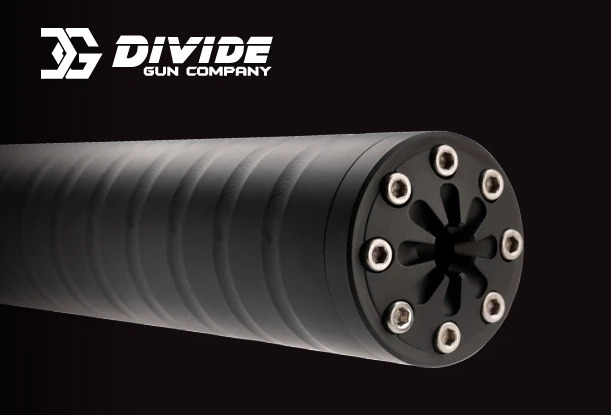
For hunters building a pack rifle with Divide’s MTN Lite Ti suppressor, this balance becomes one of the most practical reasons to go carbon.
While often marketed as “stiffer than steel,” carbon fiber is actually stiffer per unit of weight—not per unit of volume. What that means in practice is this: a carbon fiber barrel can achieve the rigidity of a heavier steel contour while weighing significantly less. Which is where it provides real value.
But if you compare two barrels at the same total weight—one steel, one carbon—testing has shown that steel often matches or exceeds carbon in absolute stiffness. Most hunting scenarios involve 1–5 shots, not extended strings of fire. In this context, both high-quality carbon-fiber barrels and steel barrels provide more than enough precision for ethical shot placement.
Heat management is one of the most talked-about—and most misunderstood—parts of the carbon fiber barrel conversation. You’ll often hear two competing claims:
The reality is more nuanced. Some carbon barrels do shed surface heat quickly, but depending on how they’re built, the carbon-resin wrap can also act as an insulator. That means heat stays in the steel liner longer, even if the outside of the barrel feels cooler.
While independent rigidity and heat testing has shown mixed results across different manufacturers, heat doesn’t matter in typical hunting scenarios. If you’re taking 1–3 shots, neither a carbon fiber barrel nor a steel barrel will heat up enough to impact accuracy in a meaningful way. Weight and balance are almost always the more important factors.
Where heat does matter:
In these environments, steel barrels—especially heavier or fluted contours—tend to perform more predictably over time.
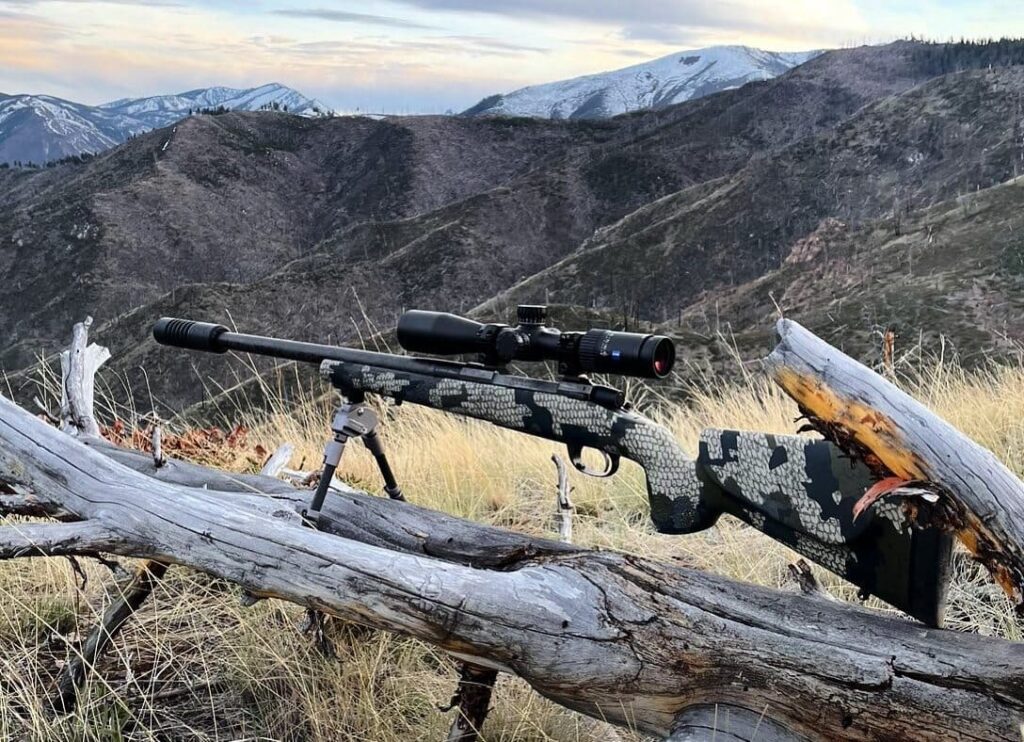
Steel barrels offer benefits that rifle makers—and those who use their products—should never ignore.
Steel barrels are significantly more affordable.
For shooting scenarios involving 5–10+ rounds in sequence, steel barrels—particularly heavier or fluted profiles—maintain point of impact more reliably than many carbon barrels. Steel remains the preferred option for:
Some gunsmiths charge more for carbon barrels or avoid working on them altogether due to the added complexity of the wrap. Steel is easier to re-thread, re-chamber, and modify. If long-term flexibility matters in your build, it gives you more options.
Barrel life is determined by the steel liner, not the outer wrap. At equivalent usage levels, carbon and steel barrels will have similar lifespans. When it comes to barrel life, cartridge choice, velocity, and maintenance habits matter far more than barrel material.
For hunters trying to reduce weight without paying the carbon premium:
Fluted steel barrels offer a strong middle ground. They reduce weight compared to standard steel contours, maintain consistent performance under heat, and cost significantly less than carbon fiber.
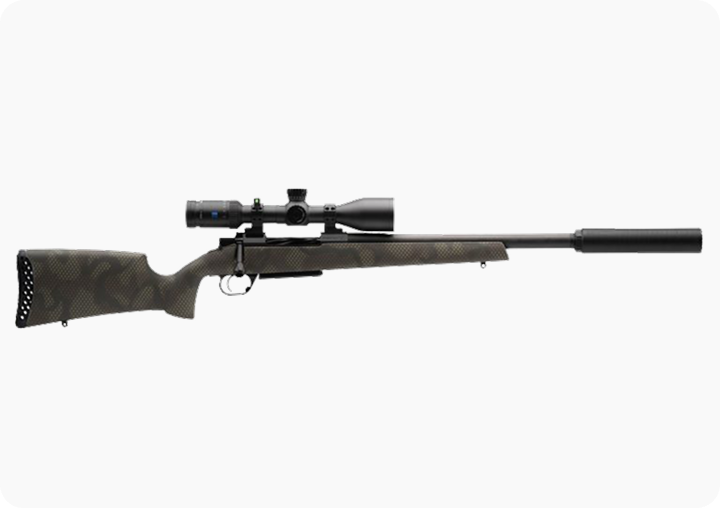
The FreemanX TI is a purpose-built rifle for hunters who need lightweight performance without sacrificing real-world usability.
There’s no wrong answer here—only what fits your setup. The right build starts with your hunting environment, not a trend.
The biggest factor in carbon barrel performance isn’t the material—it’s the manufacturer.
Wrap tension, fiber orientation, resin formulation, and the steel liner’s contour all play a role in how a barrel performs. Two carbon barrels that look identical on paper can behave very differently in the field.
The key takeaway: consistency matters more than branding. Even within the same manufacturer, production variation can impact performance.
A carbon fiber barrel—often called a carbon-wrapped barrel—uses a precision steel liner wrapped in layers of carbon fiber composite bonded with resin. The steel core handles rifling and chamber tolerances, while the carbon wrap reduces weight and changes external dimensions. Performance depends heavily on how the barrel is constructed, and quality varies considerably by manufacturer.
For hunting use, both carbon fiber and steel barrels can deliver sub-MOA accuracy with proper setup. Carbon barrels don’t inherently increase accuracy—they maintain similar accuracy at a lighter weight. Differences tend to show only during extended shooting, not typical hunting scenarios.
Carbon fiber barrels are worth it if weight and balance are critical—especially for backcountry hunting. If you’re not carrying your rifle long distances or prioritizing weight savings, a fluted steel barrel often delivers similar performance at a lower cost. The value depends entirely on your application.
Barrel life is determined by the steel liner, not the carbon wrap. Most hunting cartridges will see anywhere from 2,000 to 3,000 rounds of accurate life, depending on caliber and use. Maintenance requirements are the same as those of a standard steel barrel.
Yes—and it’s one of the strongest use cases for carbon fiber. A suppressor adds weight at the muzzle, which can make a rifle feel front-heavy. Carbon fiber barrels help balance that weight by maintaining a larger profile without adding mass, improving handling in the field.
At the end of the day, the decision between carbon fiber and steel isn’t about which one is better—it’s about what your rifle needs to do.
At Divide Gun Company, every build starts with purpose. Terrain, carry style, shot expectations, and setup all come first. Barrel material follows from that.
If you’re building a rifle and want it done right, we’ll help you spec it for how you actually hunt—not what the industry is pushing.